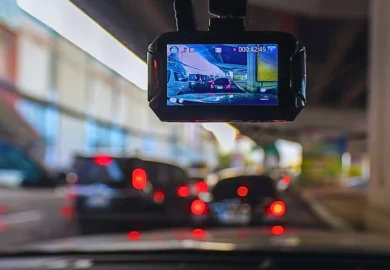
If a collision occurs, a dash camera recording may capture exactly what happened in the moments leading up to the crash. For drivers involved in a dispute over liability, this footage can provide valuable evidence that is often more reliable than conflicting witness accounts or imperfect memories. While dash camera footage does not automatically determine who is responsible for an accident, it can play a role in insurance claims and personal injury lawsuits.
Table of Contents
If you have questions about using dash camera footage in your case, contact Ankin Law at 312-600-0000 for a free consultation.
Key Takeaways
- Dash camera footage can provide objective evidence of how a car accident occurred.
- Video recordings may help establish liability when fault is disputed.
- Footage should be preserved as soon as possible after a collision.
- Dash camera evidence is strongest when combined with medical records, witness statements, and other documentation.
- An experienced attorney can help use video evidence effectively during settlement negotiations or litigation.
How Can Dash Camera Footage Help a Car Accident Claim?
Dash camera footage can be one of the most persuasive forms of evidence available after a motor vehicle accident. Unlike witness testimony, which may differ from person to person, video recordings capture events as they happen. A recording may show traffic signals, vehicle positions, weather conditions, road hazards, speeds, lane changes, or other critical details that help explain how the collision occurred.
Insurance companies frequently investigate conflicting versions of an accident. One driver may claim they had the green light while another insists they entered the intersection legally. A properly functioning dash camera may provide an objective record that helps resolve those disputes.
Video evidence can also establish important details that might otherwise be difficult to prove, including:
- Whether a driver failed to yield.
- If another vehicle crossed the center line.
- Unsafe lane changes.
- Rear-end collisions.
- Sudden braking or distracted driving.
- Road or weather conditions at the time of the crash.
When available, dash camera footage often becomes an important piece of evidence because it allows adjusters, attorneys, and potentially a jury to review the incident directly rather than relying solely on competing statements.
How Does Dash Camera Footage Affect Insurance Claims?
Insurance companies evaluate many different types of evidence when reviewing a car accident insurance claim. Dash camera footage often helps adjusters verify statements made by the parties involved, identify inconsistencies, and better understand how the accident unfolded.
When the recording clearly supports your account of the collision, it may encourage faster claim resolution because there is less uncertainty regarding liability. Likewise, video evidence may reduce the need to rely exclusively on conflicting witness testimony or incomplete police observations.
However, dash camera footage can also reveal facts that do not favor your position. If the recording shows that you were speeding, distracted, or otherwise contributed to the accident, insurers may use that evidence when evaluating comparative fault. For this reason, it is important to have an experienced attorney review the footage and explain how it may affect your claim before important decisions are made.
Can Dash Camera Footage Help Prove Fault?
One of the primary reasons drivers install dash cameras is to document accidents where liability may later be disputed. In many cases, dash camera footage helps investigators reconstruct exactly how the collision occurred and determine whether a driver’s actions contributed to the crash.
For example, a recording may capture a vehicle running a red light, making an illegal turn, following too closely, or failing to stop in time to avoid a collision. It may also show that you were driving within your lane, obeying traffic signals, and operating your vehicle safely before the impact occurred.
Although video evidence can be compelling, it is rarely viewed in isolation. Insurance companies generally compare the footage with police reports, vehicle damage, witness statements, accident reconstruction evidence, and medical documentation before making liability decisions.
When disputes arise over responsibility, dash camera recordings may strengthen your ability to prove you are not at fault by providing a clear visual record of events.
What Are the Limitations of Dash Camera Footage?
Although dash camera footage can be extremely valuable, it is not perfect evidence. Cameras only capture what falls within their field of view. Important events occurring outside the camera’s angle or behind the vehicle may not be recorded.
Image quality can also affect how useful a recording becomes. Poor lighting, heavy rain, snow, glare, or obstructions may reduce visibility and make it more difficult to interpret what occurred. In addition, some dash cameras record without audio, while others overwrite older recordings if footage is not saved quickly after an accident.
Video also does not always tell the complete story. A recording may show the collision itself but not explain why a driver reacted in a particular way or whether another factor contributed to the accident. For that reason, attorneys typically combine dash camera footage with other forms of evidence, including medical records, expert analysis, photographs, and witness testimony.
Rather than viewing dash camera footage as the only proof needed to support a claim, it is best understood as one important component of a broader body of evidence.
What Should You Do With Dash Camera Footage After an Accident?
If your dash camera records a collision, preserving the footage should be one of your priorities. Many devices automatically overwrite recordings after a certain amount of time, meaning valuable evidence could be lost if it is not saved promptly.
After ensuring everyone is safe and seeking medical attention if necessary, consider taking these steps:
- Save the original recording immediately.
- Create backup copies on another device or secure storage.
- Avoid editing or altering the footage.
- Keep the original file with its date and time information intact.
- Share the recording with your attorney before providing it to insurance companies if questions arise.
These steps complement many of the actions you should take after a car accident to preserve evidence and protect your legal rights.
Maintaining the original recording helps establish its authenticity and reduces the likelihood of disputes regarding whether the footage has been modified.
Even with high-quality recordings, however, legal guidance remains important. Video evidence is most effective when it is presented alongside medical documentation, witness statements, and other supporting evidence that fully demonstrates the circumstances of the accident and the extent of your damages.
If you have questions about how dash camera footage may affect your case, consulting an experienced car accident lawyer can help you understand your options and protect your interests throughout the claims process.
Dash camera footage can be an important asset in an Illinois car accident claim because it provides objective evidence that may clarify how a collision occurred and support your version of events. Although video recordings are not the only evidence considered, they often strengthen insurance negotiations and legal claims when combined with thorough documentation and experienced legal representation. If you have been injured in a car accident and want to understand how dash camera footage may affect your case, contact Ankin Law today at 312-600-0000 for a free consultation.