After an injury, victims often wonder, “Who is liable for injuries in retail stores?” Illinois premises liability law places legal responsibility for injuries sustained by customers on the party who failed to maintain reasonably safe standards. Liable parties include property owners, third-party contractors, and property management companies.
Table of Contents

It’s crucial to partner with a retail injury attorney after sustaining an injury. Retail stores and their insurers often fail to offer reasonable compensation to injured customers. They try to shift liability to the customers and deny their claims. Fortunately, retail store injury lawyers at Ankin Law have a proven history of taking on corporate giants and aggressively fighting for full and fair compensation. Call us today at 312-600-0000 to discuss your case with one of our lawyers at no cost.
Who Can Be Held Liable for Retail Store Injuries in Illinois?
Multiple parties may have liability for a retail store accident in Illinois, including:
Store Owner
The store owner is typically the primary liable party for an Illinois retail store injury. They must take reasonable steps to mitigate safety risks. Liability will fall on the store owner if you sustain a preventable injury due to the store owner’s negligence.
Property Owner
The property owner may be liable for injuries in parking lots, elevators, lobbies, and other common areas. This is especially true if the store operates on a larger property.
Third-Party Contractors
Some retailers outsource responsibilities to third-party companies. For example, a retail store may hire maintenance contractors to inspect and repair broken fixtures. Another store may hire janitorial services and security firms.
Liability may fall on these companies if their negligence created the hazardous condition that resulted in the injury. The maintenance contractor may, for instance, be liable if you suffer a head injury due to a loosely hanging light fixture. The security company contracted by the store may shoulder some liability if you are assaulted and injured in the hallway or parking lot.
Common Slip-and-Fall Injuries in Retail Stores
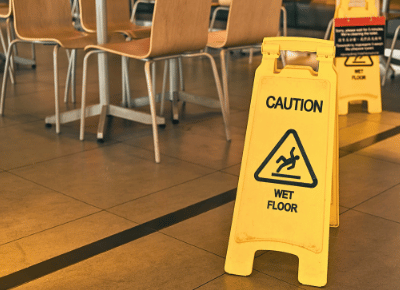
Slip-and-fall accidents account for the highest number of retail injuries. These accidents often occur due to poor floor safety, characterized by a wet floor, poor lighting, negligent maintenance, and uneven flooring.
Shoppers who slip and fall in stores often sustain serious injuries, such as:
- Spinal cord injuries
- Head concussions
- Herniated discs
- Joint injuries and dislocations
- Knee and hip injuries
- Wrist and arm injuries
Liability is rarely straightforward in slip-and-fall cases. Sometimes, multiple parties or entities may have contributed to the accident. A careful analysis of evidence can help identify all defendants and their level of liability. Determining liability and countering insurance company defense strategies can overwhelm someone without a legal background. That’s why you should have a slip and fall lawyer in your corner to help you navigate the legal process, protect your rights, and fight for compensation.
How Do Illinois Premises Liability Laws Protect Injured Shoppers?
Premise liability laws hold store owners responsible for the safety of their shoppers. In other words, the store owner has the legal duty of care to clients and other patrons visiting their establishments. The store owner must take the necessary measures to create safe environments for all shoppers.
Addressing foreseen safety risks involves taking several corrective measures. They include drying and decluttering the floor, performing routine inspections, and making repairs. It also involves installing proper lighting and warning signs in common areas, such as washrooms and walkways. These are safety standards that any reasonable store owner would create.
A retailer is liable for your injuries if the retailer was aware or should have been aware of a hazard and failed to address it. Illinois premises laws give you the legal right to file a claim and pursue compensation.
When Should You Contact a Retail Injury Attorney After an Illinois Accident?
The moments following an accident are full of confusion. Still, it’s crucial to take prompt legal action. By involving an experienced attorney early on, you can build a strong case. Your lawyer can gather crucial evidence, such as pictures of spills on the floor, before it disappears. The lawyer will use legal resources to retrieve any surveillance footage or other electronic data to prove fault.
Liability Disputes
Due to their strong financial muscle, big box stores will do everything possible to fight your claim. That may involve hiring aggressive lawyers and resorting to illegal strategies to nullify your claim. Facing such fierce opposition as a pro se litigant can be arduous. Fortunately, hiring an experienced retail store accident attorney tilts the odds of winning the case in your favor.
After Sustaining Severe Injuries
Shoppers often sustain severe injuries that require long-term, extensive treatment and attract higher settlements. Liability disputes occur when high-value claims are involved. Therefore, you need solid legal representation to protect your rights.
An experienced Chicago retail injury attorney will evaluate the full extent of your short- and long-term damages. He or she will collect the medical and financial records to calculate your economic and non-economic damages. The attorney will then negotiate a fair settlement with the responsible insurance company and move to court if negotiations fail.
Injured in an Illinois retail store due to hazardous conditions? You may have grounds to sue the store owner and any other liable party. Retail store injury attorneys at Ankin Law are here to help you recover maximum compensation. Contact us today for legal assistance.
Frequently Asked Questions (FAQs)
Who is responsible for injuries that occur inside a retail store in Illinois?
The store owner is usually the primary blameworthy party. However, other third parties may be liable based on their contribution to the accident. They include maintenance companies, property managers, and security contractors.
What evidence do I need to prove liability in a retail store accident?
You can present a range of evidence, including photos of the safety hazard, surveillance footage, witness statements, records of previously reported injuries, and maintenance records.
Can I sue a retail store if I was partially at fault for my injury?
Illinois’ modified comparative negligence rule allows you to file a claim even if you contributed to the accident. You’re eligible to file a claim only if you’re 50% or less at fault. In such a case, your settlement will be reduced by an amount that matches the percentage of fault you contributed. You are not eligible for compensation if you contributed more than 50% to the accident that caused your injuries.