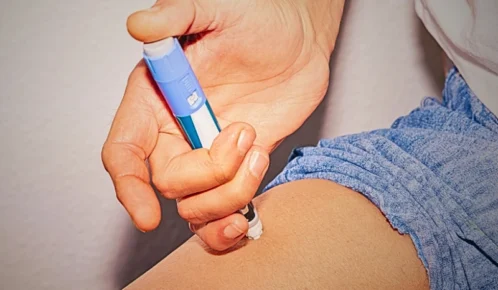
If you suffered permanent vision loss after taking Ozempic, Wegovy, or another GLP-1 medication, you may have grounds to file a pharmaceutical injury lawsuit. A new FDA warning has raised serious questions about whether drug manufacturers adequately disclosed the potential risk of a rare eye condition that can cause blindness.
Table of Contents
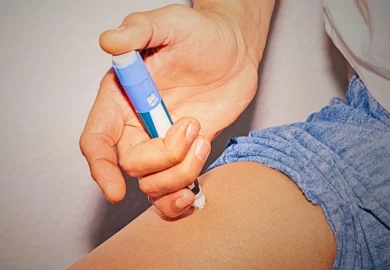
On November 9, 2026, the FDA announced that manufacturers of GLP-1 medications must update their warning labels to address the potential increased risk of non-arteritic anterior ischemic optic neuropathy (NAION). The condition can cause sudden, painless vision loss that may be permanent.
For patients who developed NAION before the warning was issued, the announcement raises an important question: Did the drug manufacturers know about the potential danger before patients and their doctors were adequately warned?
At Ankin Law, we believe patients deserve answers when a prescription medication is associated with serious, potentially preventable injuries. Our attorneys investigate dangerous drug claims and pursue accountability when the evidence supports manufacturer liability.
If you were diagnosed with NAION or suffered permanent vision loss after taking Ozempic, Wegovy, Mounjaro, Zepbound, or another GLP-1 medication, Ankin Law can review your case. Call 312-600-0000 for a free consultation.
Key Takeaways
- Patients who developed NAION after taking a GLP-1 medication may have grounds for a pharmaceutical injury lawsuit, depending on the medical evidence and circumstances.
- The FDA’s November 9, 2026, warning requires GLP-1 manufacturers to update their drug labels to address a potential increased risk of NAION.
- Failure-to-warn claims may focus on when manufacturers knew or should have known about the risk and whether they provided adequate warnings.
- A successful claim requires evidence connecting the medication to the injury, establishing a legally actionable defect or failure, and documenting the resulting damages.
- Patients who experienced permanent vision loss should preserve medical records, prescription information, and other evidence that may support a claim.
Who May Qualify for an Ozempic or Wegovy Vision Loss Lawsuit?
People who developed NAION after taking Ozempic, Wegovy, or another GLP-1 medication may be eligible to pursue legal action against the drug manufacturer.
Claims may involve patients who:
- Were prescribed Ozempic, Wegovy, Mounjaro, Zepbound, or another GLP-1 medication.
- Experienced sudden vision loss after beginning treatment.
- Received a diagnosis of NAION from an ophthalmologist or another qualified healthcare provider.
- Suffered permanent or lasting vision impairment.
- Were not adequately warned of the potential risk before their injury occurred.
These circumstances may warrant an investigation, but they do not automatically establish legal liability.
Whether a patient has a viable lawsuit depends on the specific medication, timing of the injury, scientific and medical evidence, adequacy of the warnings, and applicable law.
Can You File a Lawsuit if You Developed NAION Before the FDA Warning?
Yes. Developing NAION before the FDA’s November 2026 warning does not prevent someone from bringing a lawsuit.
In fact, the timing of a patient’s injury may be an important part of a failure-to-warn investigation.
Drug manufacturers have a responsibility to evaluate emerging safety information and comply with applicable warning requirements. An attorney may investigate whether evidence of a serious risk was available before the patient was injured and whether the manufacturer responded appropriately.
The FDA’s new warning may be relevant to that investigation, but it does not independently establish that a manufacturer’s earlier warnings were legally inadequate.
Which GLP-1 Medications May Be Involved in Vision Loss Claims?
The FDA’s warning applies to the GLP-1 receptor agonist drug class, including medications prescribed for weight management, type 2 diabetes, and other approved conditions.
Medications potentially relevant to vision loss investigations include:
- Ozempic, Wegovy, and Rybelsus: Semaglutide medications manufactured by Novo Nordisk.
- Mounjaro and Zepbound: Tirzepatide medications manufactured by Eli Lilly.
- Trulicity: A dulaglutide medication manufactured by Eli Lilly.
- Victoza and Saxenda: Liraglutide medications manufactured by Novo Nordisk.
- Other GLP-1 medications: Additional drugs covered by the FDA’s updated labeling requirements.
The FDA’s November 9, 2026, safety communication identifies a potential increased risk of NAION associated with this medication class.
However, the scientific evidence regarding individual medications may differ. A potential claim involving one GLP-1 drug is not necessarily supported by the same evidence as a claim involving another.
How Could Drug Manufacturers Be Held Liable for GLP-1 Vision Loss?
When pharmaceutical companies sell prescription medications, they are responsible for complying with applicable safety requirements and providing adequate warnings about risks they know or should know about.
FDA approval does not automatically protect a manufacturer from every product liability claim. However, federal drug regulations can significantly affect which claims may proceed.
In cases involving vision loss associated with GLP-1 medications, attorneys may investigate several potential theories of liability.
Failure to Warn About Known or Reasonably Knowable Risks
A failure-to-warn claim may arise when a drug manufacturer does not provide adequate information about a serious risk associated with its medication.
In an Ozempic or Wegovy vision loss case, an investigation may focus on when the manufacturer became aware of evidence suggesting a potential association between GLP-1 medications and NAION. Attorneys may examine clinical trial results, published research, adverse-event reports, internal safety assessments, and communications with federal regulators.
The central issue is whether the manufacturer provided legally adequate warnings based on the information available at the relevant time.
For prescription medications, Illinois generally follows the learned intermediary doctrine. Under this rule, the manufacturer’s duty to warn ordinarily runs to the prescribing healthcare professional rather than directly to the patient.
That means a failure-to-warn case may also require examining whether an adequate warning would have changed the prescribing physician’s treatment decision.
Negligent Drug Safety Monitoring
Pharmaceutical manufacturers have ongoing responsibilities to monitor and evaluate safety information after their medications enter the market.
If new evidence identifies a potential serious adverse reaction, manufacturers may be required to investigate, report, and respond to that information under applicable federal regulations.
A legal investigation may examine whether a manufacturer appropriately evaluated reports of NAION, followed federal safety requirements, and took legally required action as evidence developed.
A failure to perform a specific legal duty may be relevant to a negligence claim, but the FDA’s new warning alone does not establish that any manufacturer violated its obligations.
Defective Drug Claims
Some pharmaceutical injury lawsuits also raise allegations involving a drug’s design, manufacturing, or labeling.
However, prescription drug defect claims are subject to complicated state and federal laws. Not every theory of liability is available for every medication, and certain claims may be limited or preempted by federal law.
An attorney must evaluate the particular product, alleged defect, and available evidence before determining which legal claims can be pursued.
What Evidence Is Needed to Prove a GLP-1 Vision Loss Claim?
A pharmaceutical injury lawsuit requires more than showing that someone took medication and later developed a serious medical condition.
A successful claim generally must establish a legally recognized basis for manufacturer liability, a connection between the alleged wrongdoing and the patient’s injury, and resulting damages.
Several categories of evidence may be particularly important.
Prescription and Pharmacy Records
Prescription records can establish which medication a patient used, the dosage, when treatment began, and how long the medication was taken.
These details help attorneys examine the timeline between drug exposure and the onset of vision problems.
Ophthalmology Records and Diagnostic Testing
Medical records documenting a NAION diagnosis are particularly important because sudden vision loss can have multiple possible causes.
An attorney may review ophthalmology evaluations, visual field testing, optic nerve findings, and other diagnostic information with qualified medical experts.
Evidence Connecting the Medication to the Injury
NAION has recognized risk factors, including diabetes, high blood pressure, sleep apnea, smoking, and certain other medical conditions.
Because some of these conditions are common among people prescribed GLP-1 medications, manufacturers may dispute whether the drug contributed to an individual patient’s injury.
Medical and scientific expert testimony may be necessary to evaluate competing explanations and determine whether a causal relationship can be established.
Manufacturer Safety and Warning Information
A pharmaceutical injury investigation may also involve reviewing the drug’s historical warning labels, regulatory submissions, clinical research, and other evidence concerning the manufacturer’s knowledge of the potential risk.
This information can help determine whether the warnings were legally sufficient at the time the patient received treatment.
How Does the FDA’s New Warning Affect Potential Lawsuits?
The November 9, 2026, FDA announcement represents an important development for people investigating vision loss associated with GLP-1 medications.
After reviewing clinical trial data, adverse-event reports, and observational studies, the agency concluded that the potential increased risk of NAION warranted additional drug labeling.
The FDA’s analysis of 126 randomized controlled trials identified an incidence of approximately 6.4 NAION cases per 100,000 person-years among GLP-1 users, compared with 3.8 cases among patients receiving a placebo or another glucose-lowering medication.
The findings support the agency’s decision to require additional warnings, but they do not prove that every NAION diagnosis involving a GLP-1 user was caused by the drug. The FDA also found that some real-world comparisons did not show a statistically significant increase in risk.
For potential lawsuits, the warning establishes an important regulatory development that attorneys can evaluate alongside the broader scientific record.
The legal question is not simply whether the FDA eventually required a warning. It is whether a manufacturer failed to meet its legal responsibilities at a time when that failure could have affected the patient’s treatment and injury.
What Compensation May Be Available for Permanent Vision Loss?
If a drug manufacturer is found legally responsible for a patient’s injury, compensation may be available for the financial and personal losses associated with that injury.
Permanent vision loss may affect a person’s ability to work, drive, perform daily activities, or live independently.
Depending on the evidence and applicable law, recoverable damages may include:
- Medical expenses: Emergency evaluations, specialist appointments, diagnostic testing, and future medical care.
- Lost income: Wages lost because of missed work or an inability to return to previous employment.
- Reduced earning capacity: Long-term financial losses when vision impairment limits employment opportunities.
- Pain and suffering: Physical discomfort and emotional consequences associated with the injury.
- Loss of normal life: The effect of permanent vision loss on independence, recreation, family responsibilities, and daily activities.
- Future care and assistance: Vision rehabilitation, assistive technology, transportation, and other necessary support.
The value of a potential claim depends on the nature of the injury, its long-term consequences, the available evidence, and the applicable legal standards. No particular settlement or recovery is guaranteed.
How Long Do You Have to File a GLP-1 Vision Loss Lawsuit in Illinois?
Illinois generally has a two-year statute of limitations for personal injury lawsuits under 735 ILCS 5/13-202. However, determining when that period begins can be more complicated in pharmaceutical injury cases.
Under certain circumstances, Illinois’ discovery rule may affect when the filing period starts. Other statutory provisions, including those governing product liability actions, may also apply.
For someone who developed NAION before the FDA’s November 2026 warning, determining the applicable deadline may require examining when the injury occurred and when the person knew or reasonably should have known that it may have been wrongfully caused.
The announcement of a new FDA warning does not automatically restart or extend the deadline for every potential claim.
If you believe your vision loss may be connected to a GLP-1 medication, do not assume you have two years from the FDA announcement to file a lawsuit.
An Illinois pharmaceutical injury lawyer can evaluate the timeline and identify the deadlines that may apply to your case.
What Should You Do if You Lost Your Vision After Taking a GLP-1 Medication?
If you experienced vision loss while taking Ozempic, Wegovy, or another GLP-1 medication, protecting your health comes first.
Sudden vision loss requires immediate medical evaluation. If you have been diagnosed with NAION, discuss your medication and treatment options with your healthcare professional rather than stopping prescribed treatment on your own.
You should also preserve information that may become important in a legal investigation, including your prescription records, pharmacy history, medical evaluations, and documentation of your symptoms.
Keep records of how your vision loss has affected your employment, medical expenses, and daily activities.
Before filing a legal claim, an attorney can review this information and determine whether further investigation is warranted.
Frequently Asked Questions About GLP-1 Vision Loss Lawsuits
Can I Sue Ozempic’s Manufacturer for Blindness?
You may have grounds to pursue a claim against Ozempic’s manufacturer, Novo Nordisk, if the evidence supports a legally actionable connection between the medication, an inadequate warning or other recognized defect, and your injury. The outcome depends on the medical facts, timing, and applicable law.
Can I File a Lawsuit if I Only Lost Vision in One Eye?
Potentially. NAION often affects one eye, and permanent vision loss in one eye can cause substantial impairment. You do not necessarily need to be completely blind in both eyes to pursue a pharmaceutical injury claim.
What if I Have Diabetes or High Blood Pressure?
Diabetes, high blood pressure, or another recognized NAION risk factor does not automatically disqualify you from pursuing a lawsuit. However, these conditions may complicate the medical causation analysis. An attorney can evaluate whether the available evidence supports a claim.
Do I Have to Stop Taking Ozempic or Wegovy to File a Lawsuit?
Filing a lawsuit does not, by itself, establish what medical treatment is appropriate. Patients should speak with their prescribing healthcare professionals before making medication changes. The FDA recommends that patients who experience NAION discuss whether to continue GLP-1 treatment with their providers.
Are GLP-1 Vision Loss Lawsuits Class Action Lawsuits?
Not necessarily. Pharmaceutical injury claims may be pursued individually or coordinated with similar cases through litigation procedures such as multidistrict litigation. Whether any particular GLP-1 vision loss claim belongs in coordinated litigation depends on the status of the cases and the issues involved.
Ankin Law Is Investigating GLP-1 Vision Loss Claims
Patients should be able to trust that the medications prescribed to them come with adequate warnings about serious risks.
When new evidence raises questions about whether a drug manufacturer met its responsibilities, those questions deserve a thorough investigation.
At Ankin Law, we represent injured people throughout Chicago and Illinois. We investigate dangerous drug and product liability claims, evaluate medical evidence, and pursue compensation when manufacturers can be held legally responsible.
If you developed NAION or suffered permanent vision loss after taking Ozempic, Wegovy, Mounjaro, Zepbound, or another GLP-1 medication, we want to hear what happened.
Call Ankin Law at 312-600-0000 for a free consultation. Our attorneys can review your circumstances, explain your legal options, and help you determine what comes next.