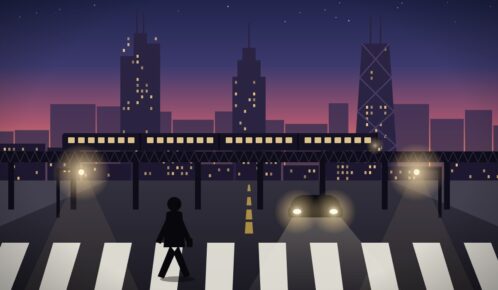
An Ankin Law analysis of eight years of City of Chicago crash data finds the evening rush becomes the most dangerous hour of the day to walk once darkness arrives an hour earlier.
Table of Contents
Key findings
- More than double: In the two weeks after clocks fell back, 103 Chicago pedestrians were injured in crashes between 5:00 and 5:59 p.m., compared with 47 in the two weeks before (2018–2025 combined).
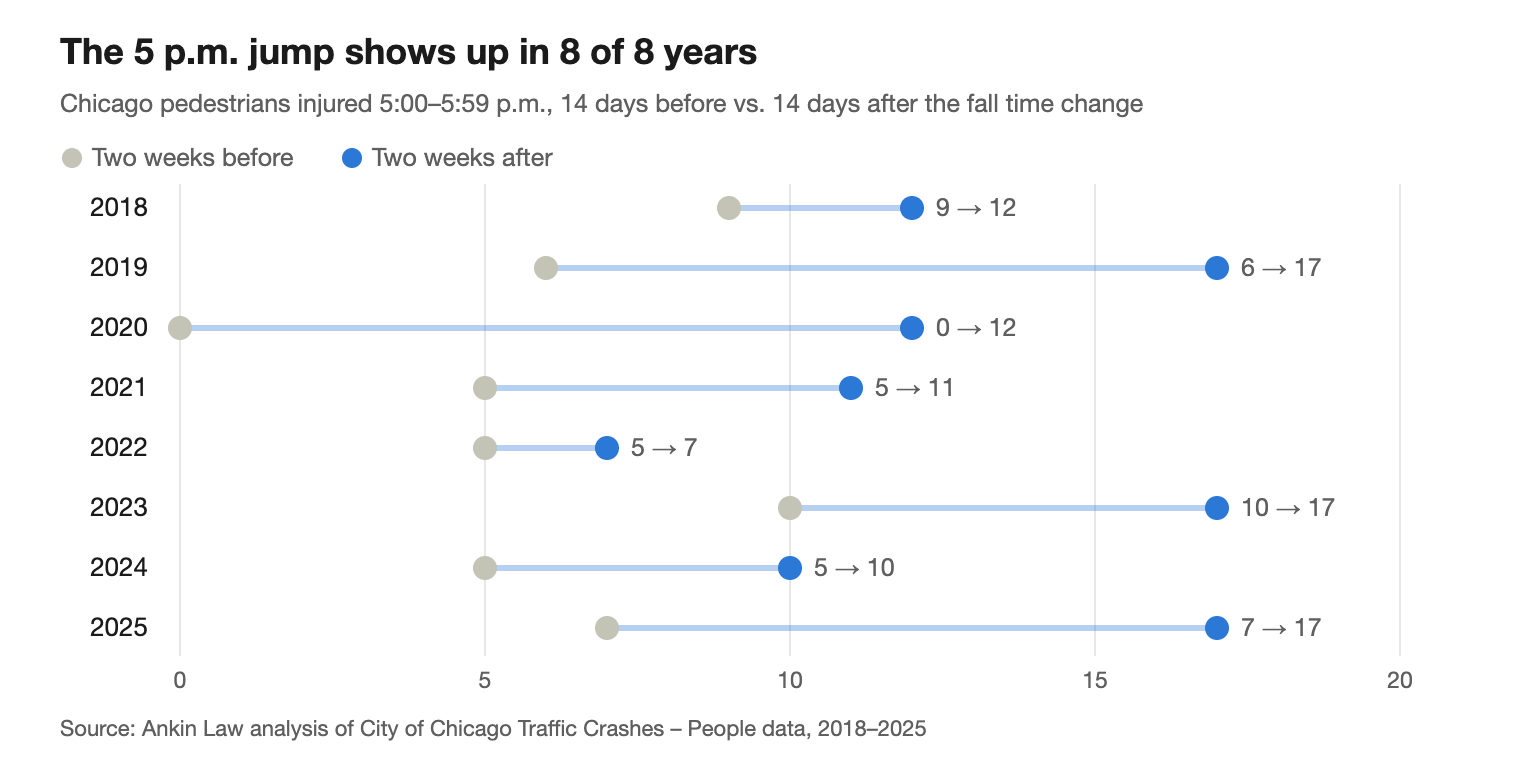
- Every year: The 5 o’clock hour saw more pedestrian injuries after the time change than before it in all eight years studied.
- Serious injuries follow the same pattern: Pedestrians killed or incapacitated in the 5 p.m. hour rose from 10 to 22.
- Statewide, the stakes are fatal: Federal data shows Illinois pedestrian deaths in the 5 p.m. hour went from 1 to 17 in the two weeks after the change (2015–2024 combined).
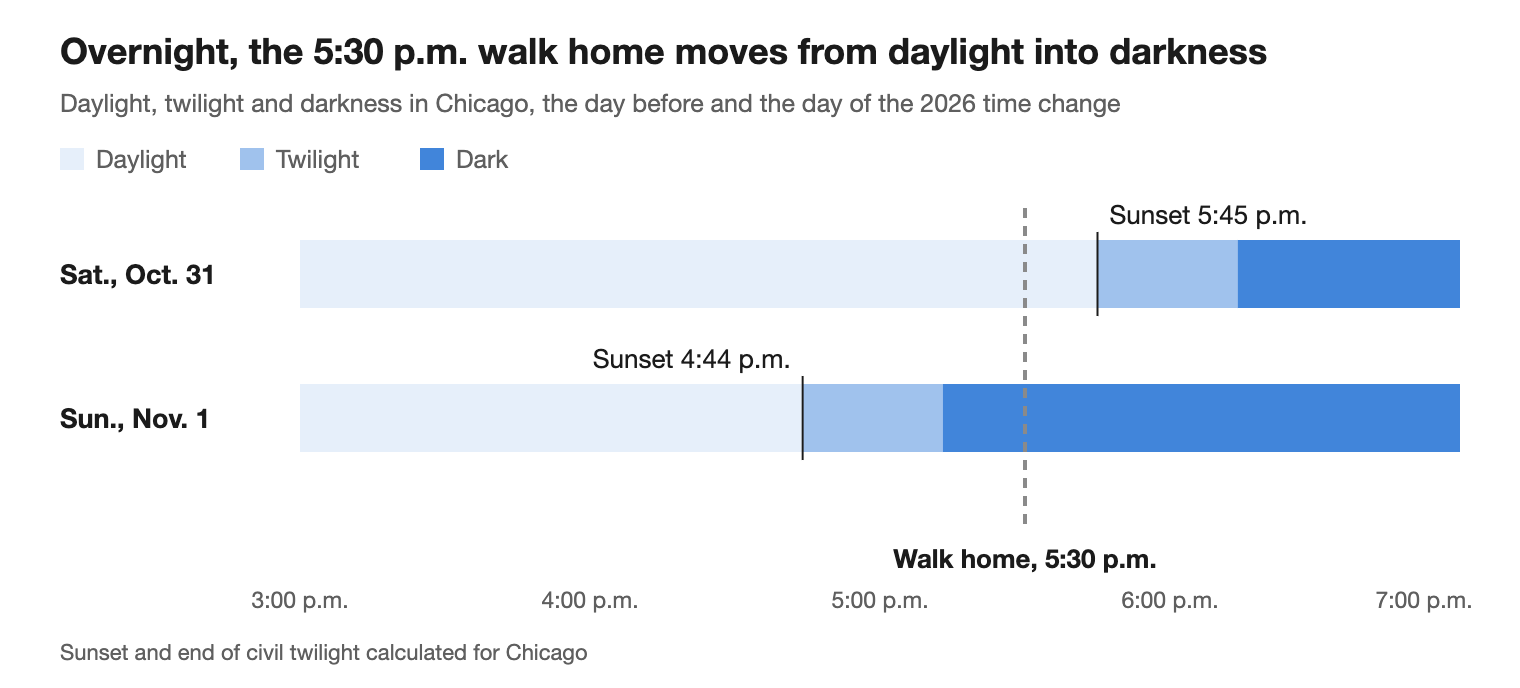
On Sunday, Nov. 1, clocks fall back an hour. For a Chicagoan walking home from the train, a bus stop or a store at 5:30 p.m., the same trip that happened in daylight on Saturday happens in the dark on Monday.
The 5 o’clock hour
Ankin Law analyzed every pedestrian injured in a police-reported crash in Chicago from 2018 through 2025, comparing the two weeks before each year’s fall time change with the two weeks after.
Before the switch, the 5 p.m. hour is an ordinary part of the evening rush, with 47 pedestrians injured across eight years. In the two weeks after, it becomes the single worst hour of the day for people on foot, with 103 injured.
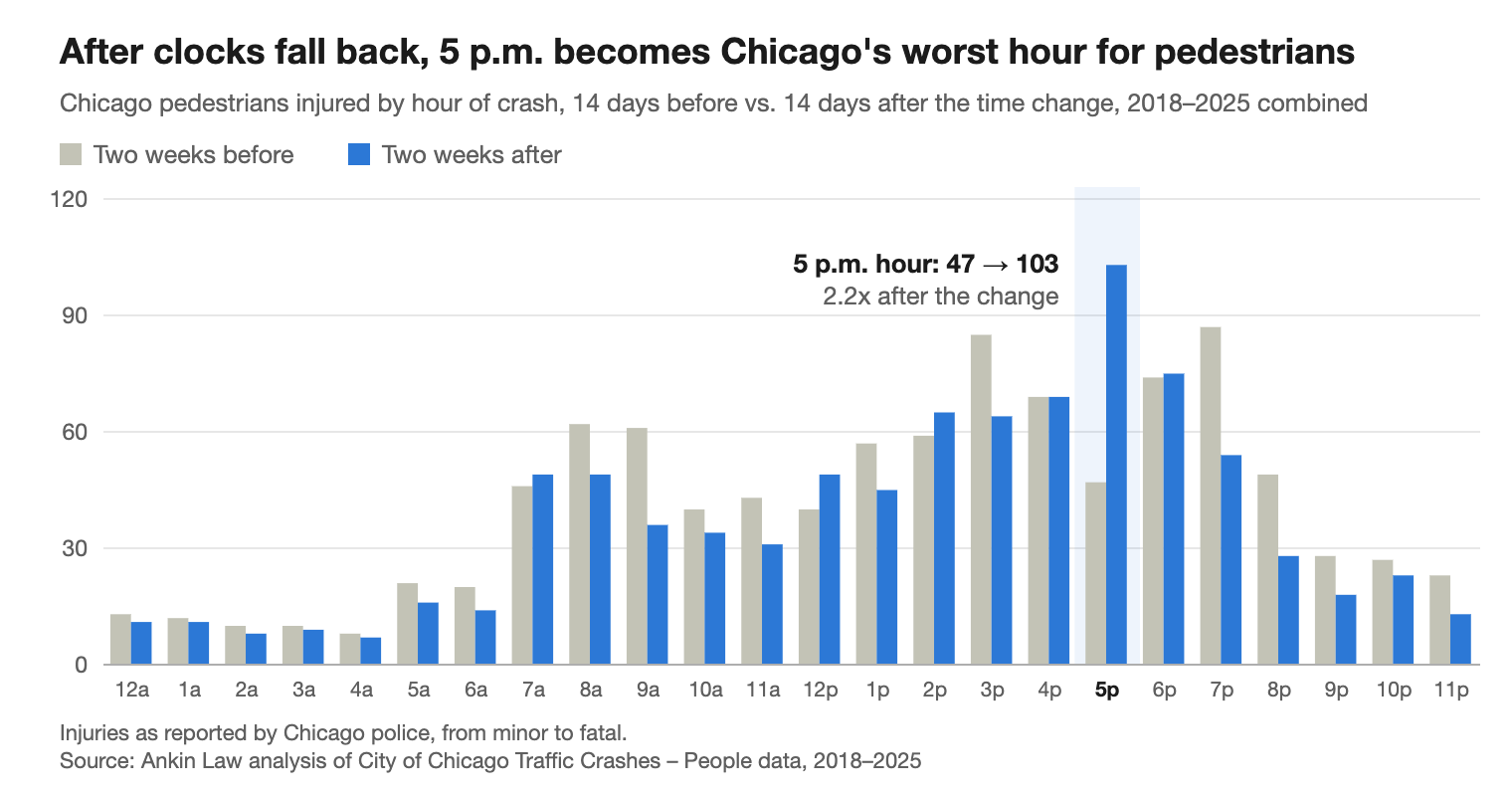
The likely reason is the light. In Chicago, the sun sets at 5:45 p.m. on Saturday, Oct. 31. On Sunday, Nov. 1, it sets at 4:44 p.m. The 5 o’clock rush moves from daylight into darkness overnight, while the 7 p.m. hour, already dark before the change, sees fewer injuries afterward.
The time change does not make walking in Chicago more dangerous overall. Total pedestrian injuries in the two weeks after the switch (881) were lower than in the two weeks before (991). What changes is when the danger peaks.
Every year, the same jump
This isn’t one bad November. The 5 o’clock hour saw more pedestrian injuries after the clocks changed than before in every year from 2018 through 2025, including 2025, the most recent time change.
The most serious crashes follow the same pattern
The jump isn’t limited to minor injuries. In Chicago, pedestrians killed or left incapacitated in the 5 p.m. hour rose from 10 in the two weeks before the time change to 22 in the two weeks after.
Statewide, federal fatality data tells the same story. From 2015 through 2024, one Illinois pedestrian was killed in the 5 p.m. hour in the two weeks before clocks fell back. In the two weeks after, 17 were. Nationally, deaths in that hour rose nearly sixfold, from 67 to 398.
What the attorneys say
“The week before the time change, a lot of Chicagoans walk home from the L or the bus in daylight. The week after, they’re making the same walk in the dark, and drivers haven’t adjusted yet,” said Howard H. Ankin, a partner at Ankin Law. “The first two weeks of November are when everyone, behind the wheel or on foot, needs to slow down and pay closer attention, especially during the 5 o’clock rush.”
How to stay safe after the time change
The first two weeks after clocks fall back are when the evening rush changes most. A few simple steps help.
If you’re walking
- Wear bright or reflective clothing after 4:30 p.m., or carry a small light.
- Cross at marked crosswalks and with the signal, and make eye contact with drivers before you step out.
- Watch for turning vehicles at intersections, and don’t assume a driver sees you.
- Put the phone away while crossing, especially near busy L and bus stops.
If you’re driving
- Slow down during the 5 o’clock rush, especially near transit stops, schools and retail corridors.
- Scan crosswalks before you turn, including right turns on red.
- Turn your headlights on earlier than you think you need them, and keep headlights and windshields clean.
- Expect pedestrians where you didn’t see them last week. The people are the same; the light is not.
About this analysis
Data sources. Chicago findings come from the City of Chicago’s Traffic Crashes – People dataset, which records every person involved in a crash reported to the Chicago Police Department, including pedestrians and their injury severity as reported by police. Illinois and national fatality figures come from the National Highway Traffic Safety Administration’s Fatality Analysis Reporting System (FARS), 2015–2024.
Method. For each year from 2018 through 2025, we counted pedestrians injured in Chicago crashes in the 14 days before the end of daylight saving time (the first Sunday in November) and the 14 days starting on the day of the change, by hour of the crash. “Injured” includes every injury level police recorded, from reported but not visible to fatal; “seriously injured” means incapacitating or fatal. All figures are totals across the years studied.
| Measure | Before | After |
|---|---|---|
| Chicago, injured, 5:00–5:59 p.m. (2018–2025) | 47 | 103 |
| Chicago, killed or seriously injured, 5:00–5:59 p.m. | 10 | 22 |
| Chicago, injured, all hours | 991 | 881 |
| Illinois, killed, 5:00–5:59 p.m. (2015–2024) | 1 | 17 |
| Illinois, killed, all hours | 85 | 77 |
Limitations. Chicago’s crash data reflects crashes reported to police, and injury severity is the responding officer’s assessment. Citywide reporting in the dataset began in late 2017, so the analysis starts with 2018. The rise in the 5 p.m. hour is statistically strong; the rise in serious injuries in that hour is consistent with it but based on smaller numbers. Crash data shows when injuries happen, not why, so the role of darkness is an inference from the timing.
Use this study
Journalists, safety advocates and researchers are welcome to share these findings and charts. We ask that you credit Ankin Law and link to this page.
Media contact: Eric Revels, Ankin Law | eric@ankinlaw.com