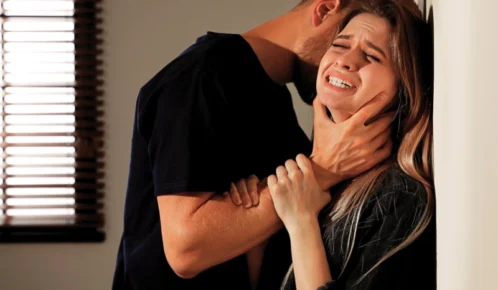
The sexual assault allegations involving seven Cornell University fraternity members have sparked national attention and exposed a troubling gap in New York’s rape laws. Under what is known as the voluntary intoxication loophole, a person who becomes incapacitated after willingly consuming alcohol or drugs may face significant legal barriers to obtaining justice through the criminal system.
Table of Contents

Illinois closed a comparable loophole in 2022. Under Illinois law, voluntarily consuming alcohol or drugs does not automatically prevent prosecutors from pursuing criminal charges. What matters is whether the person was legally capable of providing knowing consent and whether the accused knew or reasonably should have known of the person’s incapacity.
As the Cornell case draws renewed scrutiny of sexual assault laws nationwide, the distinction between New York and Illinois raises an important question: Should the way someone became intoxicated determine whether the law recognizes their inability to consent?
Key Takeaways
- The Cornell sexual assault allegations have renewed attention on New York’s voluntary intoxication loophole. The state’s definition of mental incapacitation generally requires that intoxicating substances were administered without the person’s consent.
- Illinois changed its sexual assault laws in 2022. House Bill 5441 expanded protections for victims who were unable to knowingly consent because of intoxication, even when they voluntarily consumed alcohol or drugs.
- Intoxication does not automatically establish legal incapacity. Illinois law considers whether the person was unconscious of the nature of the sexual act and whether that condition was known or reasonably should have been known by the accused.
- Criminal charges are not required to pursue a civil sexual assault lawsuit. Survivors may have grounds to seek compensation through the civil justice system, depending on the facts of their case.
If you were sexually assaulted in Chicago or elsewhere in Illinois, voluntarily consuming alcohol or drugs does not automatically take away your legal rights.
The crime victims attorneys at Ankin Law can investigate the circumstances of an assault, identify potentially liable parties, and determine whether you have grounds for a civil lawsuit. Call 312-600-0000 to discuss your legal options.
Cornell Sexual Assault Allegations Put New York’s Intoxication Loophole in the Spotlight
A civil lawsuit filed September 14, 2026, by a former Cornell University student alleges that seven men sexually assaulted her at a Chi Phi fraternity house in October 2024.
According to the lawsuit, the woman, identified as Jane Doe, was pressured into consuming ketamine before being sexually assaulted by multiple fraternity members. The complaint also alleges that fraternity members exchanged messages about the incident through a group Snapchat conversation.
The woman reported the alleged assault to Cornell University police in November 2024. However, the Tompkins County District Attorney initially declined to pursue criminal charges.
The decision drew renewed scrutiny after the civil lawsuit became public. According to subsequent reporting, the district attorney cited New York’s voluntary intoxication law among the reasons criminal charges had not been pursued.
The case has since prompted additional legal action and public attention. New York Governor Kathy Hochul appointed Attorney General Letitia James as special prosecutor to review the allegations, and Cornell University has faced questions about its handling of the investigation.
As of October 11, 2026, the criminal investigation remains under review, and the allegations in the civil lawsuit have not been established by a court. Some defendants have denied the allegations.
Beyond the allegations themselves, the case has exposed a broader problem with how certain state laws address intoxication and sexual consent.
What Is the Voluntary Intoxication Loophole?
The voluntary intoxication loophole refers to a gap in sexual assault laws that can make it difficult to prosecute cases involving victims who became incapacitated after voluntarily consuming alcohol or drugs.
Under New York Penal Law § 130.00, a person is considered mentally incapacitated when an intoxicating substance was administered without consent, or when another qualifying nonconsensual act caused that incapacity.
This creates a significant distinction between someone who was drugged without their knowledge and someone who voluntarily drank alcohol or consumed drugs but later became too impaired to understand or control what was happening.
For example, consider two situations:
- A person is secretly given a drug that leaves them unable to understand or control their actions.
- A person voluntarily consumes alcohol and becomes so severely intoxicated that they are no longer capable of understanding what is happening.
Both individuals may be severely incapacitated. Yet New York’s statutory definition of mental incapacitation treats the circumstances differently.
That does not mean voluntary intoxication makes sexual assault legal in New York. Other provisions involving physical helplessness, forcible compulsion, and lack of consent may still apply. New York courts have also recognized that voluntary intoxication can leave someone physically helpless.
However, the distinction can create substantial obstacles when prosecutors attempt to establish that a victim was incapable of consenting.
The Cornell allegations have brought those obstacles into the national spotlight. Advocates argue that the determining factor should be whether a person was capable of consenting, rather than whether the person voluntarily consumed the substance that caused the incapacity.
Illinois Closed Its Voluntary Intoxication Loophole in 2022
On June 16, 2022, Illinois Governor JB Pritzker signed House Bill 5441 into law, expanding protections for sexual assault victims who were intoxicated when an assault occurred.
Before the change, Illinois law created obstacles in cases where a victim was unable to consent because of intoxication but the accused had not administered the intoxicating substance.
Under the revised law, a person may be considered unable to knowingly give consent when intoxication renders them “unconscious of the nature of the act, and this condition was known or reasonably should have been known by the accused.”
Importantly, the law applies even when the accused did not administer the substance responsible for the person’s condition. The change addressed a weakness in the state’s criminal sexual assault statute, 720 ILCS 5/11-1.20.
A person does not automatically become capable of consenting simply because they voluntarily consumed alcohol or drugs.
Illinois law now recognizes that distinction without requiring proof that an accused offender secretly drugged the victim or forced the person to consume an intoxicating substance.
An Illinois Survivor Helped Inspire the Change
The legislation was inspired in part by Kaylyn Anh, an Illinois woman who publicly shared her experience after reporting that she had been raped by someone she knew in July 2021.
According to Capitol News Illinois, Anh reported the alleged assault to police approximately three months later. She said an officer told her the circumstances did not qualify for prosecution under Illinois law because she had voluntarily become intoxicated.
Rather than accepting that explanation, Anh advocated for changes to Illinois law. Her experience helped bring attention to the legal gap that House Bill 5441 was designed to address.
The legislation passed unanimously through both chambers of the Illinois General Assembly. For victims who previously believed that voluntarily drinking alcohol or consuming drugs meant they had no legal protection, the change was significant.
Can an Intoxicated Person Legally Consent to Sex in Illinois?
Yes, an intoxicated person may be legally capable of consenting to sexual activity in Illinois. However, intoxication can also reach a point where a person is no longer capable of providing knowing consent.
Illinois law does not establish that every person who drinks alcohol or uses drugs is incapable of consenting to sex. Instead, the circumstances must satisfy the legal requirements for incapacity.
When evaluating whether intoxication prevented someone from knowingly consenting, relevant evidence may include:
- The person’s level of intoxication and ability to understand what was happening.
- Whether the person was conscious and aware of the nature of the sexual activity.
- Whether the person could communicate or respond to what was happening.
- Witness statements describing the person’s physical or mental condition.
- Medical records, toxicology results, electronic messages, and other available evidence.
- Whether the accused knew or reasonably should have known that the person was incapacitated.
The law also recognizes that a person may be incapable of consenting for reasons unrelated to alcohol or drugs.
For prosecutors, these cases often require careful evaluation of the available evidence. A victim’s memory gaps, the absence of witnesses, or conflicting accounts can make an investigation more complicated, but those circumstances do not automatically establish that consent occurred.
The central issue is whether the elements of a criminal sexual assault offense can be established under Illinois law.
Why the Cornell Case Matters for Sexual Assault Survivors in Illinois
The Cornell allegations have generated national attention because they raise questions extending well beyond one university or one criminal investigation.
When someone reports a sexual assault involving alcohol or drugs, the law must distinguish between voluntarily consuming an intoxicating substance and knowingly consenting to sexual activity. Those are not the same decision.
Illinois recognized this problem when lawmakers amended the state’s criminal sexual assault statute in 2022.
The Cornell case illustrates why the distinction continues to matter. A legal system that focuses too narrowly on how someone became intoxicated may fail to adequately address whether the person was capable of consenting when sexual activity occurred.
For survivors, misunderstanding these laws can also have consequences. Someone who voluntarily drank alcohol before an assault may mistakenly believe they cannot report the incident or pursue legal action. Others may assume that the absence of criminal charges means the law provides no additional options. Neither assumption is necessarily correct.
Criminal Prosecution and Civil Sexual Assault Lawsuits Are Different
A criminal sexual assault case is brought by the government and requires prosecutors to prove the defendant’s guilt beyond a reasonable doubt.
A civil sexual assault lawsuit is a separate legal proceeding. It allows an injured person to seek monetary compensation from parties who may be legally responsible for the harm. Civil claims generally involve a lower standard of proof than criminal prosecutions.
This means a sexual assault survivor may have grounds for a civil lawsuit even when:
- Prosecutors decline to file criminal charges.
- A criminal investigation remains open.
- The accused is not convicted of a crime.
- The assault involved voluntary alcohol or drug consumption.
The availability of a civil claim depends on the specific facts, applicable causes of action, available evidence, and relevant filing deadlines.
Who Can Be Held Liable in an Illinois Sexual Assault Lawsuit?
A sexual assault lawsuit may involve more than the person who committed the assault.
Depending on the circumstances, other individuals, businesses, or institutions may bear civil responsibility when their wrongful conduct or negligence contributed to the harm.
Potentially liable parties may include property owners who failed to address known security risks, businesses that ignored repeated violent incidents, or employers who negligently hired or retained someone with a known history of dangerous misconduct.
In cases involving colleges, universities, or fraternities, determining civil liability may require examining whether the institution had a legal duty to protect the victim, whether it knew or should have known about a foreseeable danger, and whether its actions or failures contributed to the assault.
Institutional liability is not automatic simply because an assault occurred on the premises.
These investigations often involve reviewing previous complaints, security practices, witness statements, internal communications, and other evidence that may establish negligence.
At Ankin Law, our attorneys investigate not only what happened during an assault, but also whether another party’s negligence contributed to the circumstances that allowed it to occur.
What Compensation Can Sexual Assault Survivors Recover in Illinois?
Survivors who successfully pursue civil sexual assault claims may be entitled to compensation for the physical, emotional, and financial consequences of the assault. Depending on the facts of the case, recoverable damages may include:
- Medical expenses and ongoing treatment costs.
- Psychological counseling and mental health treatment.
- Lost wages and reduced earning capacity.
- Physical pain and suffering.
- Emotional distress and psychological trauma.
- Other economic and noneconomic losses resulting from the assault.
Punitive damages may also be available in certain cases involving particularly egregious wrongdoing, subject to applicable legal requirements.
The amount of compensation available depends on the circumstances, the harm suffered, the parties responsible, and the evidence supporting the claim.
Ankin Law Helps Sexual Assault Survivors Pursue Accountability
The Cornell sexual assault allegations have exposed a gap in New York law that Illinois addressed years ago. Although the two states have different criminal statutes, the controversy raises an important issue for sexual assault survivors everywhere: Voluntary intoxication does not automatically establish consent.
Illinois law recognizes that someone may become too incapacitated to knowingly consent, even after willingly consuming alcohol or drugs.
But understanding your legal rights is only part of pursuing accountability. When negligence contributes to a sexual assault, the people and institutions responsible for that negligence may also face civil liability.
At Ankin Law, we investigate the circumstances surrounding sexual assault, identify parties whose negligence may have contributed to the harm, and pursue compensation for victims under Illinois law.
If you or someone you love was sexually assaulted in Chicago or elsewhere in Illinois, contact Ankin Law at 312-600-0000 to discuss your case. Our attorneys can review what happened, explain your legal options, and determine whether a civil lawsuit may be appropriate.