If you suffer a fall at a Chicago bar or a fall at a Chicago restaurant, determining who pays for your medical bills and other losses depends on why the accident happened, who controlled the dangerous area, and whether the responsible party acted negligently. Illinois premises liability laws can provide a path to compensation, but a business is not automatically responsible simply because an injury occurred on its property.
Table of Contents
If you were injured because a bar, restaurant, property owner, or another party failed to maintain reasonably safe premises, Ankin Law can evaluate your legal options. Call 312-600-0000 to discuss your case.
Key Takeaways
- A Chicago bar or restaurant may be liable when its negligence causes or contributes to a customer’s fall.
- Liability often depends on who created, knew about, or reasonably should have discovered the hazardous condition.
- Restaurants and bars may face claims involving spills, poorly maintained floors, unsafe stairs, inadequate lighting, and similar hazards.
- Property owners, management companies, contractors, or other parties may share responsibility in some cases.
- Commercial liability insurance often provides the source of payment when a covered business or property owner is legally responsible.
- Your own conduct may affect the compensation available under Illinois comparative negligence rules.
Who Is Responsible for a Fall at a Chicago Bar or Restaurant?
Responsibility usually begins with the party that controlled the area where you fell. A restaurant or bar operator generally has responsibilities concerning areas used by customers, including dining rooms, aisles, entrances, restrooms, stairways, and other portions of the premises under its control.
Illinois premises liability principles require owners and occupiers to exercise reasonable care concerning the condition of property for people lawfully on the premises. That does not mean every fall creates liability. You need evidence connecting the accident to negligence.
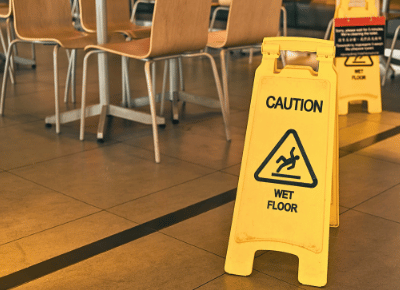
For example, if a customer spills a drink seconds before you slip and employees had no reasonable opportunity to discover it, proving liability may be difficult. The analysis can be different if employees knew about the spill and ignored it, or if it remained on the floor long enough that reasonable inspections should have discovered it.
Understanding liability for unsafe conditions is especially important when several businesses or entities have responsibilities for the property. The restaurant operator might control the dining room while a landlord maintains an entrance, elevator, or common hallway. A maintenance company might be responsible for specific repairs. Identifying who controlled the hazard can therefore be as important as identifying the hazard itself.
What If Another Customer Caused the Spill?
A fall at a Chicago bar or restaurant does not always involve a hazard created by an employee. Another customer might spill a drink, drop food, move a chair into a walkway, or create another condition that causes you to fall. In these situations, the key question is often whether the business had a reasonable opportunity to discover and address the hazard.
A restaurant may not be responsible for a spill immediately after another customer creates it if employees had no reasonable chance to learn about the condition. The circumstances change, however, when employees actually knew about the hazard or it remained long enough that reasonable monitoring of the premises should have revealed it.
Where the accident happened can also matter. A spill in a busy aisle, near a bar, or beside a service station may raise different questions about reasonable inspections than an unexpected hazard in a less frequently traveled area.
How Do You Prove a Chicago Bar or Restaurant Was Negligent?
A successful premises liability case requires more than proof that you fell and suffered an injury. The evidence must connect the responsible party’s conduct to the dangerous condition and your resulting harm.
An important issue is notice. Actual notice can exist when the business knew about the dangerous condition. Constructive notice can become an issue when a hazardous condition existed long enough that a business exercising reasonable care should have discovered and addressed it. The analysis may differ when the dangerous condition was created by the business or its employees.
For example, suppose you suffer a fall at a Chicago restaurant after stepping onto liquid beside a service station. Evidence that an employee caused the spill could affect the analysis. If another customer caused it, evidence concerning how long the liquid remained there and whether employees reasonably inspected the area may become especially important.
To prove negligence in a slip and fall, an attorney may investigate surveillance recordings, cleaning schedules, inspection procedures, employee statements, prior complaints, photographs, and witness accounts. Medical documentation can separately help establish the injuries caused by the accident and the treatment they required.
These details matter because the question of who pays ultimately depends on establishing legal responsibility. Without evidence that connects the dangerous condition to a party’s failure to exercise reasonable care, the fact that an injury occurred at a restaurant or bar may not be enough to establish liability.
Can More Than One Party Have to Pay for Your Injuries?
A fall at a Chicago bar or restaurant can involve more than the business whose name appears on the sign. Commercial properties frequently involve overlapping ownership, leasing, management, maintenance, and service arrangements.
Responsible parties may include the restaurant or bar operator, building owner, commercial landlord, property management company, maintenance contractor, or another business responsible for the specific area. Which party may be liable depends on contractual responsibilities and actual control over the property or activity involved.
Consider a fall on a defective interior staircase maintained exclusively by the restaurant. The restaurant’s responsibilities may be central to the claim. If the same accident occurs in a common stairwell controlled by the building owner or management company, the liability analysis could involve different parties. Likewise, if a contractor recently performed work that created the dangerous condition, its actions may need to be investigated.
This is one reason identifying the correct defendant should follow an investigation rather than an assumption. A slip and fall lawyer can investigate property ownership, leases, maintenance arrangements, insurance coverage, and other information that may reveal who was responsible for keeping the area reasonably safe.
What Compensation May Be Available After a Restaurant or Bar Fall?
If another party is legally responsible for your injuries, compensation may address both the immediate financial consequences and losses that continue after the accident. The amount available depends on the severity of your injuries, necessary treatment, effect on your employment, recovery period, and other factors.
Recoverable damages include:
- Past and future medical expenses
- Rehabilitation and therapy costs
- Lost wages
- Reduced future earning capacity
- Pain and suffering
- Other losses resulting from the injury
Your conduct may also become part of the liability analysis. Under Illinois’ modified comparative negligence rule, you can generally recover damages when your contributory fault is 50% or less, although your damages are reduced according to your percentage of fault. If your contributory fault is more than 50% of the proximate cause of the injury, you are barred from recovering damages.
A restaurant, bar, or insurer might argue that you failed to notice an obvious hazard, ignored a warning, or otherwise contributed to the accident. Such an allegation does not automatically determine the outcome. The circumstances surrounding the condition, the business’s conduct, and your actions can all affect how responsibility is allocated.
Who Actually Pays After a Fall at a Chicago Bar or Restaurant?
Even when a bar, restaurant, property owner, or another party is legally responsible for your injuries, that does not necessarily mean the business pays your claim directly. In many cases, a commercial liability insurance policy provides coverage for injuries caused by unsafe conditions on the premises. The insurer may investigate the accident, evaluate liability, and negotiate payment for covered losses.
Which insurance policy applies can depend on who controlled the area and caused or failed to correct the hazard. For example, a restaurant’s liability insurer may handle a claim involving a spill inside its dining room. If your fall occurs in a common entrance controlled by a commercial landlord, the property owner’s or management company’s coverage may instead become relevant. When a maintenance contractor created the dangerous condition, that company’s liability coverage could also be involved.
More than one party may share responsibility. A restaurant, landlord, property management company, or contractor could each have different duties concerning the condition that caused your fall. Their insurers may also dispute which party bears responsibility or how liability should be divided. Identifying all potentially responsible parties can therefore affect the sources of compensation available to you.
Ultimately, who pays after a fall at a Chicago bar or a fall at a Chicago restaurant depends on who was negligent, who controlled the dangerous condition, and what insurance coverage applies. Establishing those facts can determine whether you have a viable claim and which party or insurer may be responsible for your losses. To learn more about pursuing compensation after a Chicago bar or restaurant fall, contact Ankin Law at 312-600-0000.