If you were injured because a staircase handrail broke, you are not alone. Property owners have a legal duty to maintain safe premises, and when they fail to do so, serious injuries can occur. Broken or loose handrails are a common hazard in apartment buildings, offices, and public spaces, and these incidents often raise important legal questions about liability and compensation.
Table of Contents
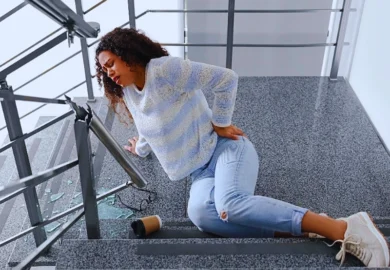
If your injury happened on someone else’s property, you may have the right to pursue a claim. Understanding how Illinois law applies to these situations can help you take the next step.
Call Ankin Law at 312-600-0000 to discuss your case and learn what options are available to you.
Key Takeaways
- Property owners in Illinois must maintain safe staircases and handrails.
- A broken handrail may qualify as a hazardous condition under premises liability law.
- Proving notice, either actual or constructive, is critical in these cases.
- Compensation may cover medical costs, lost income, and other damages.
- Legal guidance can help you build a strong claim and protect your rights.
Broken Handrails Lead to Serious Injuries
Staircases are inherently risky areas, and handrails play a critical role in preventing falls. When a handrail fails, the result is often sudden and unexpected. You may lose balance, fall down multiple steps, or land awkwardly, leading to injuries such as fractures, head trauma, or back injuries.
These accidents are especially dangerous in high-traffic buildings where stairs are used frequently. A property owner who neglects maintenance or ignores visible damage increases the likelihood of someone being injured because a staircase handrail broke.
Understanding Premises Liability in Illinois
Illinois premises liability law holds property owners responsible for maintaining reasonably safe conditions. This includes ensuring that staircases and handrails are properly installed, secure, and regularly inspected. When a handrail breaks, the key legal question is whether the property owner failed to address known or foreseeable hazards. Working with a premesis liability lawyer can help you evaluate whether negligence played a role in your accident.
Property owners are not automatically liable for every injury. However, they can be held responsible when their actions, or lack of action, create dangerous conditions.
What Counts as Unsafe Property Conditions?
A broken handrail typically falls under the category of unsafe property conditions. These conditions include hazards that a reasonable property owner should fix or warn about.
Examples related to staircases include:
- Loose or detached handrails
- Rusted or weakened supports
- Missing sections of railing
- Improper installation
When these issues are present, they can create a clear risk of injury. If the property owner knew about the problem or should have known, they may be liable for resulting damages.
Building Code Requirements for Staircase Safety
Illinois and local municipalities have building codes that set standards for staircase construction and maintenance. These codes often specify:
- Minimum height and strength requirements for handrails
- Proper anchoring and support
- Continuous handrail design for safety
When a handrail fails, it may indicate building code violations. Violations can serve as strong evidence of negligence, especially if the property owner ignored required safety standards. Noncompliance can strengthen your claim by showing that the hazard was preventable.
Proving Liability After a Handrail Accident
If you were injured because a staircase handrail broke, proving liability involves several key elements. You must demonstrate that:
- A dangerous condition existed
- The property owner knew or should have known about it
- The condition was not repaired or properly addressed
- The hazard directly caused your injury
Evidence plays a crucial role in this process. Photographs of the broken handrail, incident reports, witness statements, and maintenance records can all support your case. Medical documentation is equally important. It connects your injuries directly to the accident and helps establish the extent of your damages.
The Role of Notice in Your Claim
To succeed in a premises liability case, you must show that the property owner had notice of the dangerous condition. This can be either actual or constructive.
Actual notice means the owner was directly aware of the issue, such as receiving complaints about a loose handrail. Constructive notice means the problem existed long enough that the owner should have discovered it through reasonable inspections. Understanding constructive notice is especially important in handrail cases. For example, if a railing was visibly damaged for weeks, a court may find that the owner should have repaired it before someone was injured.
Compensation in a Premises Liability Claim
When a property owner’s negligence leads to harm, Illinois law allows you to pursue fair compensation for the impact on your life. A successful premises liability claim can help you recover compensation for a range of losses. These include:
- Medical expenses, both current and future
- Lost wages and reduced earning capacity
- Pain and suffering
- Rehabilitation and therapy costs
The full value of your claim depends on the severity of your injuries and the circumstances surrounding the accident.
Common Challenges in These Cases
While the law provides a path to recovery, these claims can be complex. Property owners and insurance companies often argue that:
- The hazard was not present long enough to be addressed
- The injured person was partially responsible
- The condition was not dangerous
Illinois follows a modified comparative negligence rule. This means your compensation may be reduced if you are found partially at fault. If you are more than 50% responsible, you may not recover damages. These challenges make it important to build a strong case supported by evidence and legal analysis.
How Legal Representation Can Help
Navigating a premises liability claim on your own can be difficult. A legal professional can help you:
- Investigate the accident thoroughly
- Identify all liable parties
- Gather and preserve critical evidence
- Negotiate with insurance companies
- Pursue litigation if necessary
When you work with experienced counsel, you gain a clearer understanding of your rights and options. This can make a meaningful difference in the outcome of your case.
If you were injured because a staircase handrail broke, taking prompt action can protect your claim. Avoid discussing fault or giving recorded statements to insurance companies without legal guidance. These early steps can influence how your case develops.
Understanding your legal options is the first step toward recovery. Call Ankin Law at 312-600-0000 today to discuss your case and explore your path forward.