


Chicago Hospital Malpractice Lawyers
Hospitals are supposed to keep patients safe. When hospital systems fail, patients pay the price.
Hospital malpractice is not limited to one careless doctor or nurse. It often involves breakdowns in staffing, communication, supervision, and decision-making that put patients at risk. When those failures lead to serious injury or death, hospitals must be held accountable.
At Ankin Law, our Chicago hospital malpractice lawyers take on hospitals and healthcare systems when unsafe practices, poor coordination, or institutional failures cause preventable harm. These cases are complex, heavily defended, and time-sensitive. We prepare them accordingly.
Our hospital malpractice lawyers represent patients across Illinois. We offer free consultations, and we don’t charge any upfront attorney fees. Call (312) 600-0000 for Ankin Law.
Table of Contents
When Hospital Systems Fail Patients
In Illinois, some of the most serious patient injuries occur because hospital systems break down.
Hospitals control how care is delivered. They set staffing levels, establish communication and escalation policies, decide what medications and equipment are available, and determine how departments coordinate when a patient’s condition worsens. When those systems fail, the consequences can be severe.
Common hospital system failures include:
- Communication breakdowns between departments or providers
- Inadequate staffing for patient volume or acuity
- Failure to escalate urgent concerns up the chain of command
- Lack of critical medications or equipment when urgently needed
- Poor coordination between the emergency department, pharmacy, surgery, and inpatient teams
Under Illinois law, hospitals may be held directly responsible when these system failures contribute to patient harm.
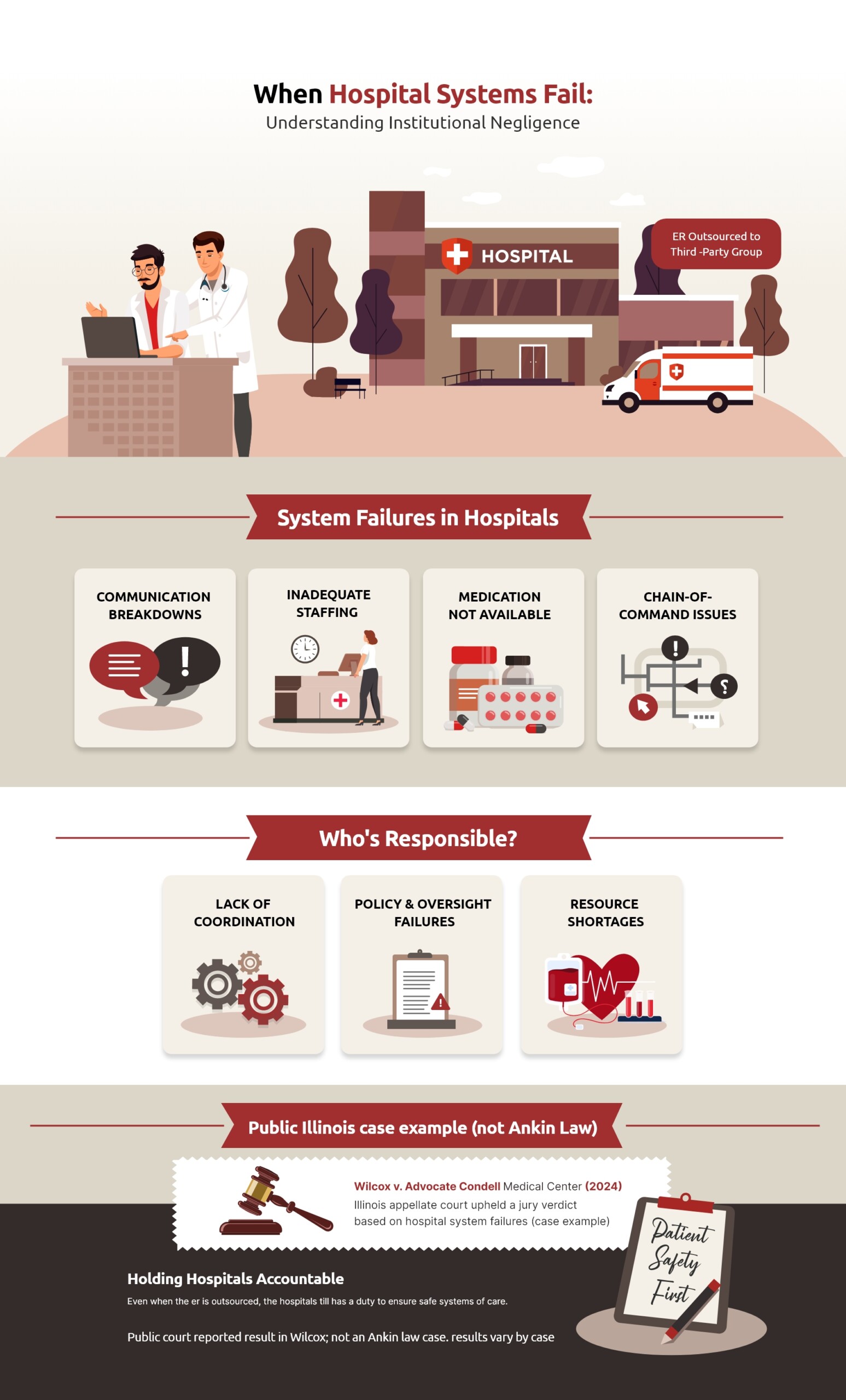
Hospital System Failure Example: Wilcox v. Advocate Condell Medical Center
In Wilcox v. Advocate Condell Medical Center, an Illinois case decided in 2024, the appellate court upheld a jury verdict based on hospital system failures rather than a single provider’s mistake. The case involved breakdowns in medication availability, coordination of care, and escalation of urgent concerns within the hospital. The court confirmed that hospitals can be held directly accountable when unsafe systems contribute to patient harm.
(This example is discussed in detail by Ankin Law partner Jeffrey A. Schulkin in a professional analysis of hospital institutional negligence .)
- Medical Malpractice Lawyer
- Anesthesia Error Lawyer
- Birth Injury Attorney
- Brachial Plexus Injury Lawyer
- Cancer Misdiagnosis
- Cerebral Palsy Lawyer
- Chiropractic Malpractice Lawyer
- Delayed Diagnosis Malpractice Lawyer
- Delayed Medical Treatment Malpractice Lawyer
- Emergency Room Errors Lawyer
- Erb’s Palsy Lawyer
- Failure to Diagnose Lawyer
- Failure to Monitor Patients Lawyer
- Failure to Treat Malpractice Lawyer
- Heart Attack Misdiagnosis Lawyer
- Hospital Malpractice Lawyer
- Medication Error Lawyer
- Nursing Negligence Medical Malpractice Lawyer
- Pediatric Medical Malpractice Lawyers
- Plastic Surgery Error Attorney
- Radiology Malpractice Lawyer
- Sepsis Lawyer
- Stroke Lawyer
- Surgical Error Lawyer
What Is Considered Hospital Malpractice?
Hospital malpractice occurs when a hospital’s negligence, whether through its staff, policies, or systems, causes injury or death to a patient. This can include errors in diagnosis or treatment, surgical mistakes, medication errors, inadequate monitoring, unsafe conditions, or failures in hospital operations.
Unlike claims that focus on one individual provider, hospital malpractice cases often involve institutional negligence, meaning the hospital itself failed to provide safe systems of care. Patients harmed by hospital malpractice may be entitled to compensation for medical expenses, lost income, pain and suffering, and other losses.
Institutional Negligence and Hospital Liability in Illinois
Hospitals are not just buildings where care happens. They are active participants in patient care, and they have independent duties to ensure safety.
Illinois courts recognize that hospitals can be held directly liable when patient injuries result from system-level failures, not just individual medical decisions. Institutional negligence focuses on how the hospital was designed and operated, including its policies, supervision, communication systems, and resource decisions.
A hospital may be liable when harm results from failures such as:
- Lack of effective care coordination
- Missing or unenforced escalation policies
- Chronic understaffing
- Failure to ensure necessary medications, equipment, or specialty coverage
- Ineffective communication systems that delay urgent treatment
These cases examine why providers were unable to act appropriately and whether the hospital’s own systems created predictable, preventable risks to patients.
When Is a Hospital Liable for Employee Negligence?
Hospitals can also be held responsible for the negligent actions of their employees and agents. Under Illinois law, hospital liability may arise through:
- Actual agency or respondeat superior, when the negligent provider is a hospital employee acting within the scope of their duties
- Apparent or implied agency, when a patient reasonably believes the provider was acting on behalf of the hospital
In determining whether a hospital may be liable, factors include:
- The nature of the relationship between the provider and the hospital
- Whether the hospital controlled how care was delivered
- Whether the hospital controlled compensation or scheduling
- Whether the patient was informed that a provider was an independent contractor
Hospitals cannot always avoid responsibility by outsourcing care or pointing to individual providers.
Common Reasons Hospitals Can Be Sued for Malpractice
Hospitals may be held accountable when injuries are caused by failures at the institutional level, including:
Negligent Hiring and Credentialing
Hospitals must properly screen, credential, and monitor healthcare professionals. Hiring unqualified staff or ignoring known safety issues can expose patients to serious risk.
Inadequate Staffing
Hospitals are responsible for maintaining staffing levels appropriate to patient volume and acuity. Understaffing can delay care, increase errors, and compromise patient safety.
Lack of Training or Supervision
Hospitals must train staff on safety protocols and enforce compliance. Failure to supervise or enforce procedures can lead to preventable harm.
Procedural and Policy Failures
Hospitals may be liable when they fail to develop, implement, or enforce policies designed to protect patients, including communication, infection control, and escalation protocols.
Why Hire a Lawyer for a Hospital Malpractice Case?
Hospital malpractice cases are heavily defended. Hospitals and insurers often dispute responsibility and control access to critical internal records.
An experienced hospital malpractice lawyer can:
- Investigate hospital policies, staffing, and system failures
- Work with medical and healthcare administration experts
- Obtain and analyze medical records and internal documents
- Negotiate with hospitals and insurers
- Take cases to court when fair resolution is not offered
At Ankin Law, we prepare hospital malpractice cases with the expectation that hospitals will contest liability aggressively.
Frequently Asked Questions About Hospital Malpractice
Are damages capped in hospital malpractice cases in Illinois?
No. Illinois does not cap damages in medical or hospital malpractice cases. Patients may seek compensation for both economic and non-economic losses.
Why sue the hospital instead of just a doctor?
Because many injuries result from system failures controlled by the hospital. Holding hospitals accountable can address unsafe practices and help prevent similar harm to other patients.
How long do I have to file a hospital malpractice lawsuit?
In most cases, Illinois law allows two years from the date of injury, but exceptions apply. Speaking with a lawyer promptly is critical.

Ankin law has been a great experience. They really care and want to make sure you are back to 100% or as close to it. They took their time and explained everything to me very well about the process. I’ve been working with Karolina and she is absolutely amazing. Really going above and beyond!

Helpful Resources From Our Hospital Malpractice Lawyers
Inside the Sacred Heart Hospital Investigation
The Medicare fraud scandal at Chicago’s Sacred Heart Hospital continues to shock and horrify, with alarming details about unnecessary medical treatment, substandard health care, and Medicare fraud emerging over the past several weeks.
Are Hospitals Liable for Staph Infections in Patients?
Victims of medical negligence may wonder, “are hospitals liable for staph infections?” A hospital may be held liable for staph infections in patients if there are implications of negligence and medical malpractice. Since hospital staph infections are contracted by patients in numerous ways, negligence or incompetence on the part of the hospital must be proven.
What Damages Are Available in a Medical Malpractice Claim?
When a person suffers an illness, injury, or disability due to medical malpractice, that person is entitled to collect both economic and non-economic damages. These include special damages for medical expenses and general damages for pain and suffering
Talk to a Chicago Hospital Malpractice Lawyer
If you believe hospital negligence or system failures caused harm to you or a loved one, Ankin Law can help you understand your options and protect your rights.
Call (312) 600-0000 to schedule a free consultation with a Chicago hospital malpractice lawyer at Ankin Law.