


Nursing Negligence Medical Malpractice Lawyer
Patients and families may suffer serious harm when a nurse makes a preventable medical mistake. Medication errors, ignored symptoms, or failure to follow treatment instructions can cause complications that should never occur. Our nursing negligence medical malpractice lawyers help patients and families pursue compensation after preventable medical mistakes by nursing staff.
Nurses play a central role in patient safety. They monitor vital signs, administer medication, record symptoms, and alert physicians when conditions change. When these duties are ignored or handled carelessly, a patient’s condition can quickly worsen.
A legal claim may arise when a nurse’s conduct falls below accepted medical standards and causes measurable harm. Patients harmed by negligent care often face longer hospital stays, additional procedures, lost income, and lasting health complications.
Acting quickly may help preserve critical medical documentation and witness testimony.
“If a nurse ignores symptoms or makes a preventable mistake, the consequences can be life-altering. Patients trust medical professionals to act carefully and follow safety procedures. When that trust is broken, accountability matters.”
~ Howard Ankin, Chicago Nursing Negligence Medical Malpractice Lawyer

If you believe nursing negligence caused your injury, contact Ankin Law at (312) 600-0000 for a free consultation and learn what legal options may be available.
Table of Contents
What Is Nursing Negligence in Medical Malpractice Cases?
Nursing negligence occurs when a nurse provides care that falls below accepted medical standards and a patient suffers harm as a result. Illinois law requires nurses to follow established treatment procedures, document patient conditions accurately, and communicate concerns to supervising physicians.
Healthcare providers must take reasonable steps to protect patient safety. When those steps are ignored, negligence may occur.
Common factors involved in nursing negligence include:
- Failure to monitor symptoms
- Medication mistakes
- Poor communication between medical staff
- Failure to follow physician orders
- Delayed response to emergencies
These errors may cause complications such as infections, worsening illness, surgical complications, or permanent injury.
How Nursing Errors Occur in Chicago Healthcare Facilities
Nursing errors often occur in fast-moving medical environments where staff shortages and communication breakdowns create unsafe conditions. Hospitals and medical systems must maintain appropriate staffing levels and training programs to prevent patient harm.
When these systems fail, mistakes can happen during routine care.
- Medical Malpractice Lawyer
- Anesthesia Error Lawyer
- Birth Injury Attorney
- Brachial Plexus Injury Lawyer
- Cancer Misdiagnosis
- Cerebral Palsy Lawyer
- Chiropractic Malpractice Lawyer
- Delayed Diagnosis Malpractice Lawyer
- Delayed Medical Treatment Malpractice Lawyer
- Emergency Room Errors Lawyer
- Erb’s Palsy Lawyer
- Failure to Diagnose Lawyer
- Failure to Monitor Patients Lawyer
- Failure to Treat Malpractice Lawyer
- Heart Attack Misdiagnosis Lawyer
- Hospital-Acquired Infection Lawyer
- Hospital Malpractice Lawyer
- Medication Error Lawyer
- Nursing Negligence Medical Malpractice Lawyer
- Pediatric Medical Malpractice Lawyers
- Plastic Surgery Error Attorney
- Radiology Malpractice Lawyer
- Sepsis Lawyer
- Stroke Lawyer
- Surgical Error Lawyer
- Wrongful Death From Medical Malpractice Lawyer
Medication Errors
Medication mistakes are one of the most common forms of nursing negligence. These errors may involve:
- Administering the wrong drug
- Giving incorrect dosages
- Missing scheduled medications
- Failing to check for drug interactions
Even small dosage errors can lead to serious complications.
Failure to Monitor Patients
Nurses must monitor patient symptoms and vital signs. A patient who shows warning signs of infection, internal bleeding, or respiratory distress requires immediate medical attention.
If a nurse ignores abnormal readings or delays contacting a physician, the patient’s condition may deteriorate quickly.
Improper Medical Documentation
Accurate charting allows doctors and nurses to track a patient’s condition and treatment history. Incomplete documentation can result in duplicate medications, delayed diagnoses, or incorrect treatment decisions.
Ignoring Patient Complaints
Patients often report pain, breathing problems, confusion, or dizziness before a serious medical event occurs. When these complaints are dismissed or ignored, necessary treatment may be delayed.
Common Types of Nursing Negligence Cases
Nursing negligence occurs in many healthcare environments. Medical malpractice cases often involve hospitals, nursing homes, rehabilitation centers, and outpatient surgical facilities.
Hospital Nursing Negligence
Hospital nurses handle patient monitoring, medication administration, and post-procedure care. When protocols are ignored, serious complications may arise.
Examples include:
- Delayed response to emergency symptoms
- Failure to follow physician treatment orders
- Inadequate monitoring after surgery
- Failure to identify infection symptoms
Hospital negligence cases may involve both individual nurses and the healthcare facility responsible for staffing and supervision.
Nursing Home Negligence
Residents of long-term care facilities rely on nursing staff for daily medical support. When caregivers fail to provide proper care, elderly residents face significant risks.
Common examples include:
- Pressure ulcers
- Untreated infections
- Dehydration
- Falls resulting in fractures
Families often discover these issues after a resident experiences sudden health decline.
Emergency Room Nursing Errors
Emergency departments require fast triage decisions and continuous patient monitoring. Delays in identifying serious conditions such as strokes or heart attacks may cause permanent injury.
Mistakes during patient intake or triage can delay treatment for life-threatening conditions.
Post-Operative Nursing Errors
After surgery, nurses monitor patients for complications such as internal bleeding, blood clots, or infection. Failure to observe symptoms may allow a complication to progress without treatment.
Post-operative negligence may lead to sepsis, organ damage, or extended recovery periods.
Who Can Be Held Liable for Nursing Negligence in Illinois?
Multiple parties may share legal responsibility for nursing negligence.
Potentially liable parties include:
- The individual nurse involved in the error
- Hospitals or medical systems
- Nursing homes or assisted living facilities
- Staffing agencies providing temporary nurses
- Supervising physicians or administrators
Hospitals may be responsible for negligent conduct through legal doctrines that hold employers accountable for employee actions.
A detailed investigation often identifies additional contributing factors such as understaffing or inadequate supervision.
What Compensation May Be Available in Nursing Negligence Cases?
Patients harmed by nursing negligence may pursue compensation for financial losses and personal harm caused by medical errors.
Compensation may include:
- Medical expenses related to corrective treatment
- Rehabilitation and therapy costs
- Lost income during recovery
- Long-term disability impacts
- Physical pain
- Loss of normal life activities
Illinois law does not impose damage caps in medical malpractice claims, which allows juries to evaluate the full impact of a patient’s injuries.
Why Nursing Negligence Claims Require Detailed Evidence
These cases rely on detailed medical records, expert testimony, and careful review of hospital procedures. Healthcare providers and insurance companies often defend these cases aggressively.
Several legal elements must be established.
Proving the Standard of Care
Medical professionals must provide treatment that meets accepted professional standards. A malpractice claim must show that a nurse acted differently than a reasonably careful nurse would have under similar circumstances.
Medical experts often review records and explain proper procedures during litigation.
Medical Records as Evidence
Hospital records, medication logs, and physician notes often reveal how an error occurred. In many cases, inconsistencies in documentation provide key evidence.
Establishing Causation
A malpractice claim must show that the nursing error directly caused the injury. If a patient already had a medical condition, proving causation may require careful analysis of medical records and treatment timelines.
Time Limits for Filing Malpractice Claims
Illinois law generally allows two years from the date the injury was discovered to file a medical malpractice lawsuit. Certain exceptions may apply depending on the circumstances.
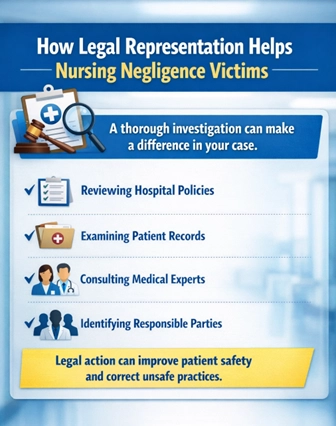
How Legal Representation Helps Nursing Negligence Victims
Medical negligence claims require careful investigation. Attorneys often work with medical professionals to analyze treatment records and determine whether a nurse failed to meet professional standards.
An investigation may include:
- Reviewing hospital policies
- Examining patient records
- Consulting medical experts
- Identifying responsible parties
A legal claim may encourage healthcare providers to correct unsafe practices and improve patient safety.
What To Do After Suspected Nursing Negligence
If you suspect nursing negligence caused harm to you or a family member, taking the right steps early can help protect your health and your legal rights. Medical malpractice cases often depend on records, timelines, and documentation that may become harder to obtain over time.
The first priority should always be medical care. If your condition worsens or new symptoms appear, seek treatment from another qualified healthcare provider as soon as possible. A second medical opinion may help identify complications or confirm that a mistake occurred during treatment.
Patients and families should also begin gathering documentation related to the medical incident. Hospital discharge papers, medication lists, physician instructions, and follow-up care records may all help clarify what happened during treatment.
Important steps may include:
- Requesting copies of your medical records
- Writing down symptoms and changes in your condition
- Documenting conversations with healthcare providers
- Keeping receipts and records of medical expenses
- Noting the timeline of events surrounding the injury
Medical records are especially important in nursing negligence claims. These records may show medication administration times, vital sign monitoring, physician orders, and nurse documentation. Even small inconsistencies can help reveal when an error occurred.
It is also important to avoid discussing the incident with hospital administrators or insurance representatives before seeking legal guidance. Healthcare systems often begin internal investigations after a complaint is made. Statements made during this process may later be used in legal proceedings.
An attorney reviewing a potential nursing negligence case may examine medical records, consult with medical experts, and determine whether the nursing care provided met accepted professional standards.
Legal investigations often focus on questions such as:
- Whether symptoms were documented and reported properly
- Whether medication protocols were followed
- Whether hospital staffing levels affected patient care
- Whether emergency procedures were delayed
Early legal review can also help ensure that filing deadlines under Illinois malpractice law are met. Waiting too long to act may make it harder to preserve evidence or obtain witness testimony.
Patients and families who suspect a preventable nursing error should act quickly to protect their health and clarify their legal options.
Frequently Asked Questions About Nursing Negligence
Patients often have questions after a preventable medical error occurs. The following answers address common concerns about nursing negligence claims.
How do I know if a nurse’s mistake qualifies as negligence?
A nursing error may qualify as negligence when the conduct falls below accepted medical standards and directly causes harm. Examples may include medication mistakes, delayed response to symptoms, or failure to follow physician instructions. Medical records and expert review often determine whether negligence occurred. An attorney may evaluate the circumstances and explain possible legal options.
How long do I have to file a nursing negligence lawsuit in Illinois?
Illinois typically allows two years from the date an injury was discovered to file a medical malpractice lawsuit. However, certain circumstances may shorten or extend this deadline. Cases involving minors or delayed diagnosis may involve different filing timelines. Speaking with an attorney promptly can help protect evidence and preserve legal rights.
Can hospitals be held responsible for a nurse’s mistake?
Hospitals may be responsible for the actions of nurses who work within their facilities. When a nurse acts within the scope of employment, the healthcare provider may share legal responsibility. Hospitals may also face liability for unsafe staffing levels, inadequate training, or failure to supervise staff properly.
What evidence is used in nursing negligence cases?
Evidence often includes medical records, medication logs, hospital policies, and testimony from medical experts. These records help explain how a nurse’s actions deviated from accepted medical standards. Investigations may also examine staffing schedules and communication between medical staff members.
Speak With a Chicago Nursing Negligence Medical Malpractice Lawyer Today
Patients who suspect nursing negligence should seek legal guidance quickly. Early action helps protect important evidence and clarifies potential legal options.
If you or a family member were harmed by nursing negligence, call Ankin Law at (312) 600-0000 to get started with a consultation and learn what steps may be available under Illinois law.